There is a lot of noise today. We have experts claiming Software Engineering is dead, SaaS is dead, design skills are obsolete, and Product Managers are just ‘vibe coders.’
I see many of these prophecies circulating. This series is meant to debunk some of those theories while providing an overview of how I see the world as it actually exists today.
If the last few years have taught us anything, it is to ’expect the unexpected'.
Who is a PM?#
At its core, a Product Manager (PM) is the person responsible for the strategy, roadmap, and feature set of a product. Often described as the “connective tissue” of an organization, a PM sits at the intersection of Business, Technology, and User Experience (UX).
While the role varies wildly depending on the company size and industry, the fundamental goal remains the same: to solve user problems in a way that meets business objectives.
The Intersection Model#
A PM ensures that what the team builds is:
- **Business (Value):** Does this solve a problem people will pay for?
- **Technology (Feasibility):** Can we build this—and can AI help us build it faster?
- **UX (Usability):** Is the 'vibe' right for the user?
Core Responsibilities#
If you were to look at a PM’s daily calendar, you’d likely see a mix of the following:
1. Strategy & Vision
They don’t just decide what to build; they define why it should exist. This involves researching market trends, analyzing competitors, and setting long-term goals.
They use SWOT analysis, JTD, Customer Journey Mapping etc., If the vision is the destination, the Strategy is the route. PMs use roadmaps to communicate the sequence of problems they intend to solve.
Outcome-based Roadmapping: Instead of listing “Build a Chatbot,” a strategic PM lists “Reduce Customer Support Response Time by 20%.” This focuses the team on results rather than just shipping code.
2. Prioritization
Resources are finite. A PM must decide which features are “must-haves” and which belong in the “maybe someday” pile. They manage the Product Backlog—a prioritized list of work for the development team.
They normally use frameworks such as RICE (Reach , Impact, Confidence, Score) to score a feature for them to be prioritized.
3. Execution & Delivery
Defining Critical User Journeys (CUJs):
The PM maps out the exact paths a user takes to achieve a goal. By defining these CUJs, you ensure the team isn’t just building “features,” but is instead smoothing the friction in a user’s most important tasks. If the CUJ isn’t seamless, the feature isn’t finished.
Opportunity Sizing & Business Goals:
Before a single designer picks up a tool, the PM must answer: Is this worth it? They conduct opportunity sizing to estimate the potential impact on the bottom line. They align the feature with specific Business Goals—whether that’s driving top-of-funnel growth, increasing retention, or opening a new revenue stream.
The “What” and the “Why”:
Every ticket in the backlog should have a clear “Why.” The PM ensures that engineers and designers aren’t just executing tasks; they are solving a validated problem. This clarity prevents “scope creep” and keeps the team focused on the highest-leverage work.
Translating Strategy into Logic:
In the Product Requirements Document (PRD), the PM expands on the strategy with surgical precision. This includes clear goals, KPIs (Key Performance Indicators), and OKRs (Objectives and Key Results). They define exactly what “winning” looks like before the build begins.
4. Communication
PMs are the ultimate translators. They explain technical constraints to stakeholders (like CEOs or Sales teams) and translate business goals into functional requirements for developers.
A PM’s strategy only works if the rest of the company believes in it. PMs act as “Internal Evangelists,” constantly pitching the strategy to:
Executives: To secure budget and resources.
Engineering/Design: To provide context so they understand why they are working on specific tasks.
Sales/Marketing: To ensure the story being told to customers matches the product being built.
What a PM is Not
There are a few common misconceptions about the role:
Not the “CEO of the Product”: Unlike a real CEO, a PM usually has no direct authority over the people they work with. They must lead through influence, logic, and data rather than rank.
Not a Project Manager: While they do manage timelines, a Project Manager focuses on “How and When” (resources and schedules), whereas a Product Manager focuses on “What and Why” (value and strategy).
The era of the " Product Manager" is shifting into the age of the “Product Builder.”
Traditionally, product development was a linear relay race:
Research → PRD → Design → Engineering
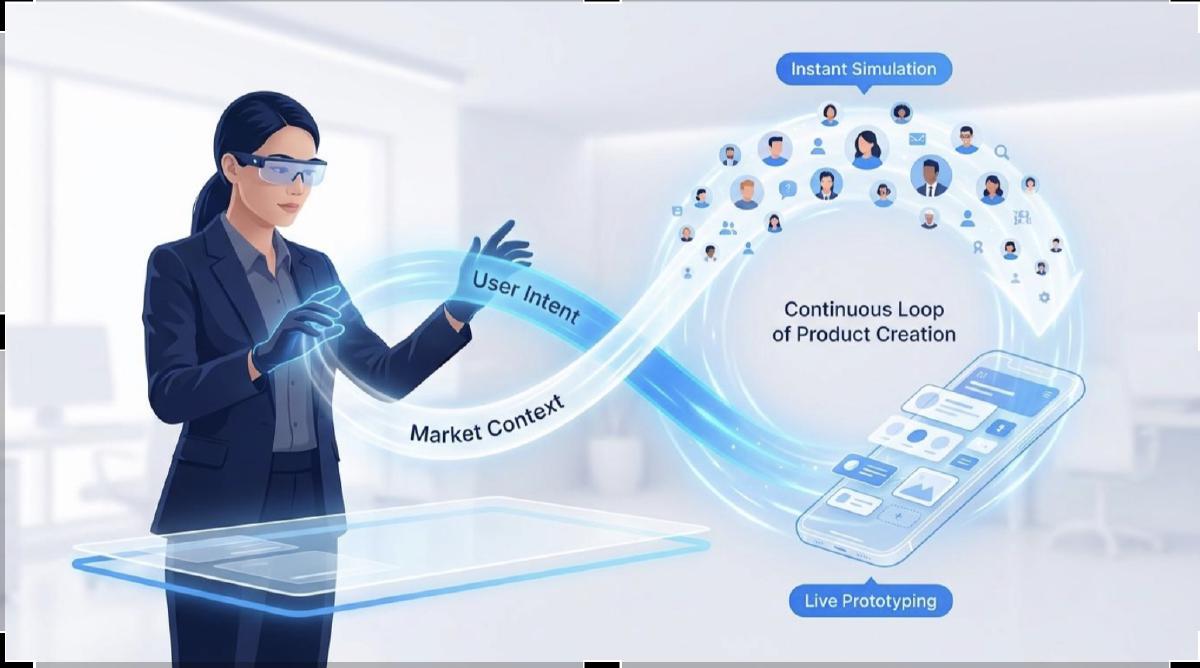
Today, that is collapsing into a continuous loop of creation. We spent weeks in research, followed by more weeks drafting long requirement documents, then handing them off to design and engineering teams. Today, that linear process is becoming a fast, continuous loop of creation.
With specialized AI assistants, the distance between defining a problem and seeing a working solution has narrowed from months to just a few hours. This doesn’t just make us faster—it changes our fundamental role.
Here is how the modern product lead is evolving:
From Research to Orchestration: Move from sifting through reports to using AI to synthesize thousands of customer signals in seconds.
From Brainstorming to Simulation: Don’t guess. Use AI to simulate how 100 different customer personas would respond to a feature before you build it.
From Writing Docs to Defining Intent: Static PRDs are dead. We are moving toward live, technical specifications that AI IDEs can directly consume.
Tomorrow’s post:
The future belongs to those who curate the right context and articulate the clearest problems. I’ll be sharing a high-res breakdown of the ‘Old Way’ vs. the ‘AI Way’ journey.
P.S. If you’re interested in the ‘how,’ check out my series with Upasana Pati on #aiforeveryone (Github, Videos) and my latest notes on Vibe Coding.
If you want to see how this works in practice, I highly recommend exploring the concept of ‘Vibe Coding’ or checking out Shubham Saboo ’s latest insights on the new way of PM role.
Do you have other topics in mind, please do suggest
If you have questions/comments/suggestions, please reach out to me kanch@cloudrace.info